
Expert Clothes & Carpet Moth Control
Clothes moth larvae feed on wool carpets, cashmere, silk, and upholstery fabrics, spinning sticky webbing and cutting irreversible holes in garments. Woodrush Pest Control provides comprehensive residual eradication, IGR lifecycle breaking, and ULV fogging across Reading, Berkshire, and Hampshire.
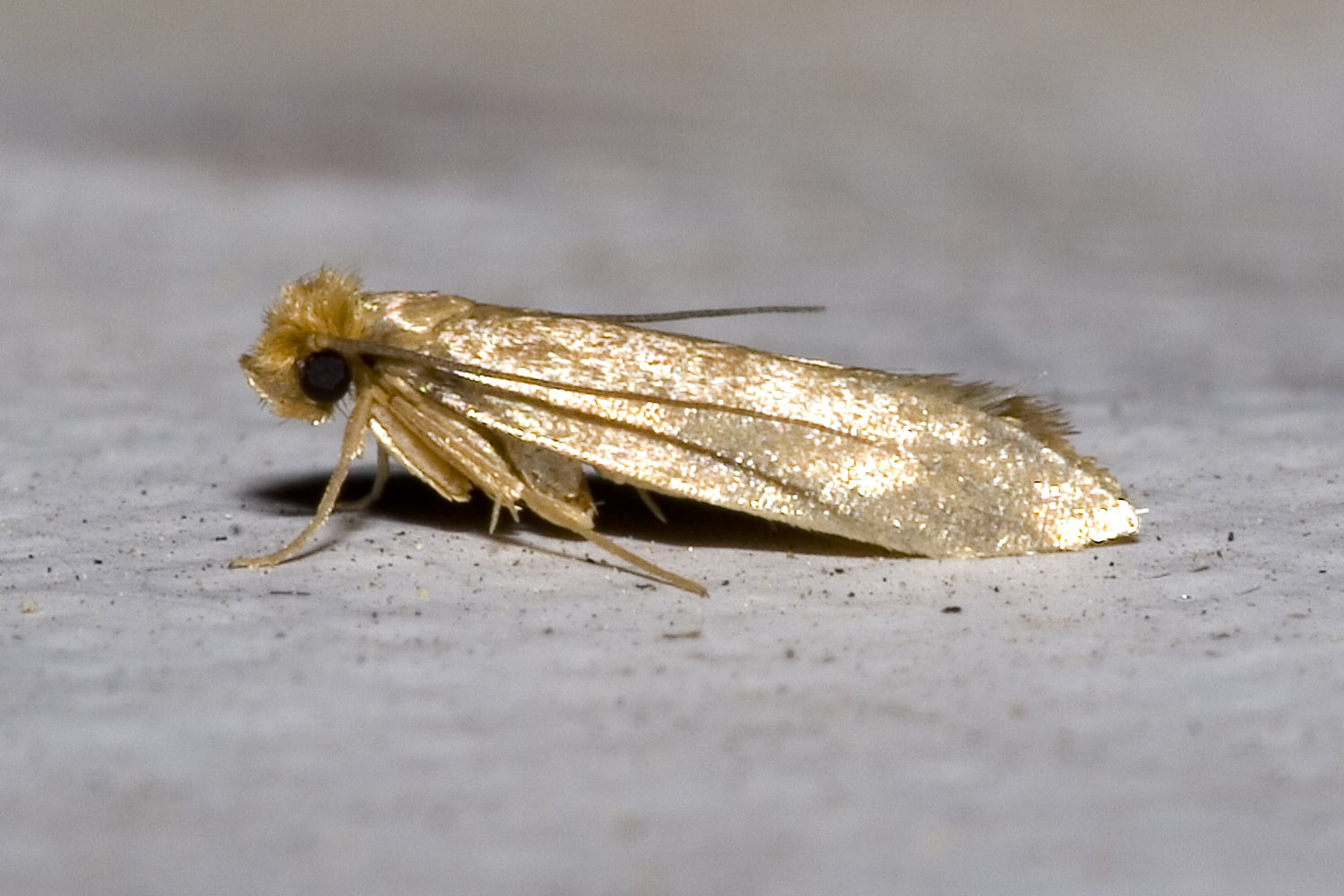
Key Signs You Have a Clothes Moth Problem
Clothes moths dislike light and prefer dark wardrobes and unvacuumed carpet perimeters. Spotting these early signs prevents severe damage to expensive natural garments.
Holes in Wool & Cashmere
Irregular small holes appearing in woollen suits, cashmere jumpers, silk ties, and winter coats that have been stored hanging or folded in wardrobes.
Silken Webbing & Cases
Fine, sticky white webbing tunnels or small cylindrical cocoon cases attached to damaged clothing, carpet underlay, or wardrobe corners.
Threadbare Carpet Areas
Sections of wool or blended carpet where pile has been grazed down to the hessian backing, especially in dark corners, under beds, or beneath low-standing furniture.
Small Buff Moths Scuttling
Small (5–7mm), golden-buff moths that run or flutter awkwardly when wardrobes are opened or carpets are disturbed, actively avoiding bright room lights.
Creamy Caterpillar Larvae
Tiny (10mm max), semi-translucent white caterpillars with dark heads feeding on fibres or crawling along wardrobe seams, drawers, and carpet edging.
Granular Frass Deposits
Fine sand-like pellets (frass) dyed the exact colour of the eaten fabric, accumulating inside clothing folds and along carpet perimeter grippers.
What Our Clothes Moth Service Includes
Moth eggs and pupae can survive in carpet underlay for months. Our systematic approach targets every lifecycle stage to prevent secondary emergence:
Forensic Inspection
Identifying breeding hotspots in wardrobes, drawers, under beds, and behind heavy furniture, and checking loft spaces for natural nesting materials.
Micro-Encapsulated Spray
Applying professional residual insecticides along skirting boards, under carpet edges, and inside wardrobe corners to eliminate crawling larvae on contact.
Insect Growth Regulators (IGR)
Treating with specialized hormone modulators that prevent moth eggs and larvae from pupating into breeding adults, permanently interrupting the cycle.
ULV Space Fogging
Dispensing a fine airborne biocide mist across rooms and walk-in wardrobes to knock down all flying adult moths and penetrate curtain folds and fabric cavities.
Frequently Asked Questions About Clothes Moths
Everything you need to know about clothes and carpet moth eradication across Reading, Berkshire, and Hampshire.
What causes a clothes moth infestation in a home?
Common clothes moths (Tineola bisselliella) and case-bearing clothes moths thrive in warm, dark, undisturbed environments with access to natural keratin fibres. They are attracted to wool carpets, woollen suits, cashmere knitwear, silk, feathers, and upholstery, especially where fabrics carry microscopic traces of sweat or food oils.
Is it the adult moths or the larvae that cause damage?
It is strictly the larvae (caterpillars) that eat fabrics; adult moths have no mouthparts and cannot feed. However, adult moths mate and lay hundreds of sticky eggs deep within carpet pile and clothing folds, producing continuous waves of hungry larvae that chew holes and spin webbing over fabrics.
How can I tell the difference between clothes moths and pantry moths?
Clothes moths are small (5–7mm), silvery-gold or buff-coloured, and scuttle rapidly across carpets rather than flying strongly. Pantry or food moths (such as Indian meal moths) are larger, two-toned grey and bronze, and infest dried cereals, flour, rice, and pet food in kitchen cupboards.
How do you eradicate clothes moths permanently?
We carry out a systematic multi-step treatment: thorough inspection to trace all harbourages, intensive HEPA vacuuming, application of micro-encapsulated residual insecticides and Insect Growth Regulators (IGR) to baseboards and under carpets, and ULV space misting to eliminate flying adults and penetrate fabric folds.
Do cedarwood balls and pheromone traps solve moth infestations?
No. Cedarwood balls and lavender sachets offer very weak repellency and do not kill established larvae. Sticky pheromone traps only catch adult male moths and are useful solely for monitoring, not for eradication.
Are your clothes moth treatments safe for children and pets?
Yes. All treatments use professional-grade biocides approved under HSE and BPCA regulations. We advise a standard 3 to 4-hour clearance period during application to allow the fine mist and spray to dry completely, after which the property is safe for children and pets.
Protect Your Wool Carpets & Clothing. Call Grant Today.
Comprehensive residual treatments and IGR applications stop clothes moth larvae chewing through your valuable fabrics. Speak with our specialist for friendly advice.