
Professional Fly Control & Cluster Fly Treatment
From cluster flies pouring out of the loft in autumn to bluebottles in the kitchen or drain flies around the sink, each fly species needs a different approach. Woodrush Pest Control identifies the breeding source, treats the voids and drains, and proofed the entry points — across Reading, Berkshire, and Hampshire.
Key Signs You Have a Fly Problem
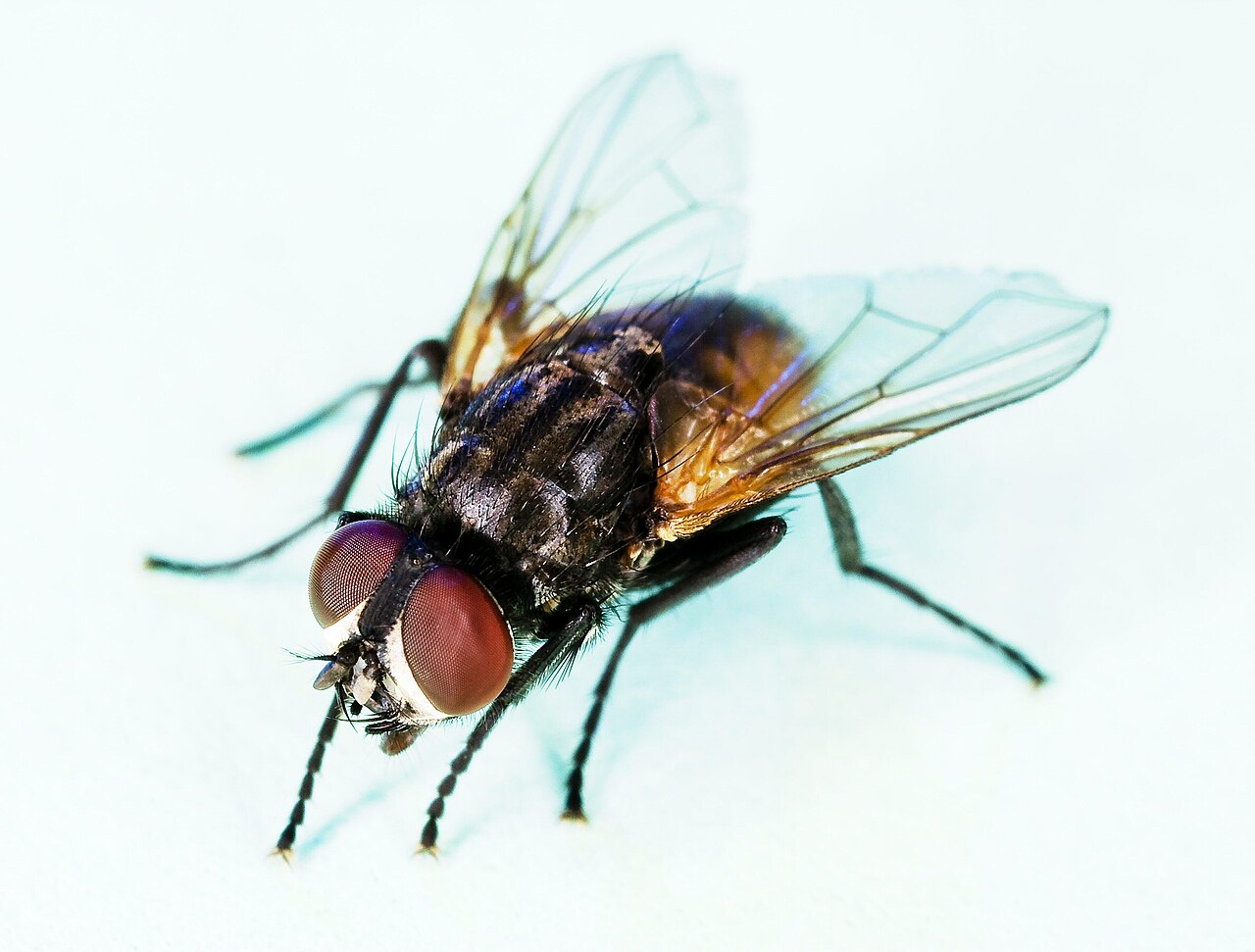
Each fly species points to a different breeding source. Identifying which one tells us exactly where to treat.
Cluster Flies in the Loft
Sluggish, dark flies clustering in roof voids, around sash windows, and light fittings — overwintering cluster flies emerging on warm autumn and spring days.
Bluebottles in One Room
Large, loud, metallic-blue blowflies appearing in a single room — a strong indicator of a dead rodent, bird, or animal in a cavity wall, chimney, or subfloor.
Tiny Moth-Like Drain Flies
Small (2–4mm) furry, moth-like flies resting on bathroom and kitchen walls near sinks, showers, and drains — drain flies breeding in the organic sludge lining pipes.
Fruit Flies Around Fruit & Bins
Tiny (3mm) tan-coloured flies hovering around overripe fruit, wine bottles, recycling, and compost — fruit flies breeding in fermenting sugary residues.
Fly Spit Marks on Ceilings
Persistent small dark or yellowish speckles on light fittings, ceilings, and window panes — fly regurgitation and faecal spots that mark a heavy, established infestation.
Maggots on Floors & Worktops
Cream-coloured legless larvae crawling on floors, worktops, or dropping from ceiling lights — blowfly larvae that have bred in a carcass or refuse source inside the property.
What Our Fly Eradication Service Includes
Spraying adult flies never solves the problem — the breeding source keeps producing them. Our treatment targets the source, then the adults.
Species & Source Identification
Identifying the fly species and locating the true breeding source — loft void, drain, carcass, or refuse — before any treatment begins.
ULV Fogging & Residual Treatment
Ultra-low volume fogging of loft voids and affected rooms to knock down cluster flies, plus residual surface treatments to stop re-emergence.
Drain & Carcass Source Treatment
Clearing drain fly breeding sludge, removing accessible dead-animal sources, and treating voids to eliminate blowfly larvae at source.
Proofing & Prevention Advice
Sealing eaves, soffit, and window-frame entry points used by cluster flies, plus drainage and hygiene advice to prevent recurrence next season.
HACCP-Compliant Fly Control for Food Premises
Restaurants, cafes, pubs, food retailers, and commercial kitchens need a fly control programme that satisfies environmental health and HACCP audits. We combine non-chemical proofing, electronic fly killers, targeted residual treatments away from food surfaces, and documented service records.
Don't Just Spray the Adults
Killing visible flies leaves the breeding source untouched and the infestation returning within days. A source-first treatment resolves it permanently — speak with our specialist today.
Frequently Asked Questions About Fly Control
Everything you need to know about professional fly control across Reading, Berkshire, and Hampshire.
Why do I suddenly have lots of flies in my house?
Cluster flies (Pollenia rudis) enter lofts and roof voids in autumn to overwinter, then emerge in large numbers on warm days. Bluebottle and blowflies are attracted by dead rodents or birds in cavity walls or chimneys. Fruit flies appear around fermenting fruit, drains, and recycling. Identifying the species tells us where the source is.
What are the small flies around my kitchen sink and drains?
Drain flies (Psychodidae) are tiny moth-like flies that breed in the organic sludge lining drains, traps, and overflow pipes. Fruit flies (Drosophila) breed in fermenting fruit, spillages, and bottle bins. Both are resolved by clearing the breeding source — not by spraying adults. We treat the drains and breeding sites directly.
How do you treat a cluster fly problem in the loft?
Cluster flies cluster in roof voids and sash-window frames to hibernate. We treat the loft space with a residual ULV fogging treatment to knock down the overwintering population, seal the entry points they use under eaves and soffits, and advise on re-emergence timing. The same flies will otherwise return each autumn.
Why are there bluebottles buzzing in one room of my house?
A single room full of large, loud bluebottles almost always means a dead rodent or bird in a cavity wall, chimney, or subfloor. We trace the source, remove the carcass where accessible, and treat the void to eliminate the blowfly larvae. Spraying the adults alone leaves maggots dropping into the room for weeks.
Are fly treatments safe for kitchens and food businesses?
Yes. We use HACCP-compliant approaches for food businesses — non-chemical proofing, electronic fly killers, and targeted residual treatments applied strictly away from food preparation surfaces. All biocides are applied under UK biocide and BPCA guidance with clear re-entry advice.
Do you supply fly control for restaurants and commercial kitchens?
Yes. We provide discreet contracted fly prevention for restaurants, cafes, pubs, food retailers, and commercial kitchens across Reading and Berkshire — combining electronic fly killers, proofing, drain treatment, and residual control with documented service records.
Flies in the Loft or Kitchen? Call Grant Today.
Source-first fly control resolves the breeding source and stops re-emergence. Speak with our specialist today for advice or to book your visit.